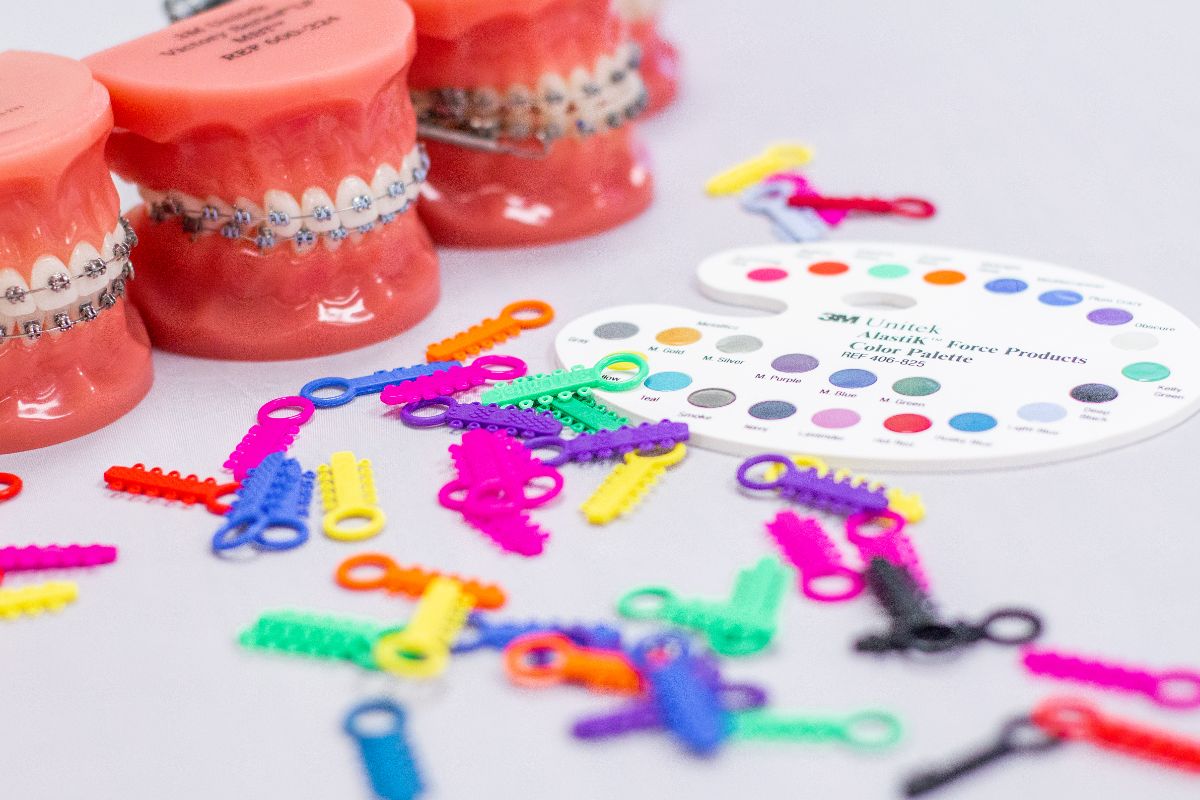
Rubber bands connect the brackets on your upper teeth to the brackets on your lower teeth, and that’s what lets braces fix your bite. Braces line up each row of teeth, and rubber bands, also called elastics, move the top and bottom rows into the right position against each other.
Getting braces is a big transition for anyone, especially with the addition of extra care techniques like rubber bands. Learning new ways of eating, brushing, flossing and attaching and removing rubber bands daily can be a challenge. Thankfully, the team at Alba Orthodontics is ready to help set up each and every patient for success with their braces! And remember: rubber bands are temporary, but a beautiful, healthy smile can last a lifetime!
Why You Might Need Rubber Bands
While everyone’s orthodontic journey is unique, many patients with braces will need rubber bands at some point during their treatment. Though inconvenient, rubber bands are essential to the process, helping to correct bite alignment, reduce overbites or underbites and close gaps or spaces between your teeth.
Rubber bands come in different sizes, colors and resistances. The doctors at Alba Orthodontics are experts at using rubber bands to assist with teeth and jaw alignment and will give you exactly what you need, along with detailed instructions and support on how to use them most effectively.
How Rubber Bands Help with Orthodontic Care
There are multiple ways that orthodontists can create alignment in the mouth, but the combination of braces and rubber bands is the most common. They are much easier to manage than bulky headgear. Plus, tooth-colored rubber bands can blend in with your natural smile or you can choose colored elastics to add some fun and personality to your grin!
Learning how braces and rubber bands work can help you put them to their best use. Instead of thinking of it as tedious to remove and attach slippery bands throughout the day, you are actually partnering with your doctor to help move your teeth more efficiently.
Braces work by securing wires and brackets along each row of teeth on the top and the bottom. Adjusting these brackets can align each row of teeth alongside each other, but it doesn’t correct the alignment between the top and bottom sets of teeth. This is where rubber bands come in to create resistance between the bottom and top!
Wearing rubber bands as directed by Dr. Alba will help move your teeth and jaw into the best alignment for a beautiful smile and better oral health.
Rubber Bands vs. the Bands on Your Brackets
The rubber bands in this post stretch between your top and bottom teeth, attaching to small hooks on your brackets. The tiny bands that wrap around each individual bracket are something different. Called ligature ties, they hold the wire in place and don’t move your bite on their own. Damon braces, which we use for both metal braces and clear braces, hold the wire with a built-in clip instead, so they don’t need ties at all. For a closer look at every piece of your braces, see the main elements of braces.
Common Rubber Band Setups
Where your bands go depends on what your bite needs. Your doctor will show you exactly where to hook yours, but these are the setups patients see most often.
- For an overbite. Bands run from an upper tooth near the front back to a lower back tooth, helping the lower teeth come forward and the upper teeth move back.
- For an underbite. The direction flips, running from a lower tooth near the front back to an upper back tooth.
- Square or box elastics. Bands connect four teeth, two on top and two on the bottom, to bring the top and bottom teeth together, often to close an open bite.
- For a crossbite. Bands cross from the inside of an upper tooth to the outside of a lower tooth to line up the sides of your bite.
Rubber Bands with Clear Aligners
Rubber bands aren’t only for braces. Clear aligner patients sometimes wear them too, hooked to small buttons bonded to the teeth or to notches cut into the trays. They do the same job of moving the bite. If you’re weighing aligners, our post on what makes Spark clear aligners different is a good next read.
How to Set Yourself Up for Success with Rubber Bands
With rubber bands, the first and most important lesson is paying close attention to Dr. Alba’s instructions at each and every appointment. Our doctors are experts at watching your progress and adjusting your rubber band regime over the course of your treatment to get results as fast as possible!
Typically, Dr. Alba will request that you wear your rubber bands 24/7, removing them only for meals and to brush and floss teeth. It’s especially important to keep them on when sleeping and to change the bands after each removal to ensure cleanliness. Be sure to keep an extra bag of elastics on hand, and to only use the rubber bands that Alba Orthodontics supplies.
How Long Will I Need Rubber Bands?
It depends on how far your bite needs to move. Some patients wear them for a few months, while others need them for a larger part of treatment. Your doctor will check your progress at each visit and let you know when you’re done.
What Happens If I Skip Them?
Rubber bands only work when they’re in. Leaving them out, even for part of the day, lets your teeth drift back toward where they started, which can add time to your treatment.
Soreness and Broken Bands
Your teeth may feel sore for the first few days after you start rubber bands or switch to a new size. That usually fades as your teeth adjust, and consistent wear helps, since taking them out for long stretches can bring the soreness back. If a band snaps, replace it with a fresh one from your bag. If a hook or bracket breaks, check our orthodontic emergencies page and give us a call.

Frequently Asked Questions About Rubber Bands for Braces
Does everyone with braces need rubber bands?
No. Many patients need them at some point, but it depends on how your top and bottom teeth fit together. Your orthodontist will let you know if and when you need them.
How long do you wear rubber bands each day?
Most patients wear them all day and night, taking them out only to eat and to brush and floss. Put in a fresh pair each time.
What do square rubber bands do for braces?
Square or box elastics connect four teeth, two on top and two on the bottom. They’re usually used to bring the top and bottom teeth together, such as when closing an open bite.
Do rubber bands for braces hurt?
They can make your teeth sore for the first few days or after switching to a new size. The soreness usually fades as your teeth adjust, and wearing them consistently helps.
Can you eat with rubber bands on your braces?
No. Take them out before meals, brush if you can and put in a fresh pair afterward.
Get Your Free Orthodontic Consultation
Regardless of whether you end up needing braces, elastics or some other form of orthodontic care, Alba Orthodontics is the perfect place to start your journey. Recognized in the Central Pennsylvania area for their excellence in orthodontics, you know you’ll end up with a sparkling smile. Schedule your free consultation at our Mechanicsburg office today! We also welcome families from Harrisburg, just a few minutes away.