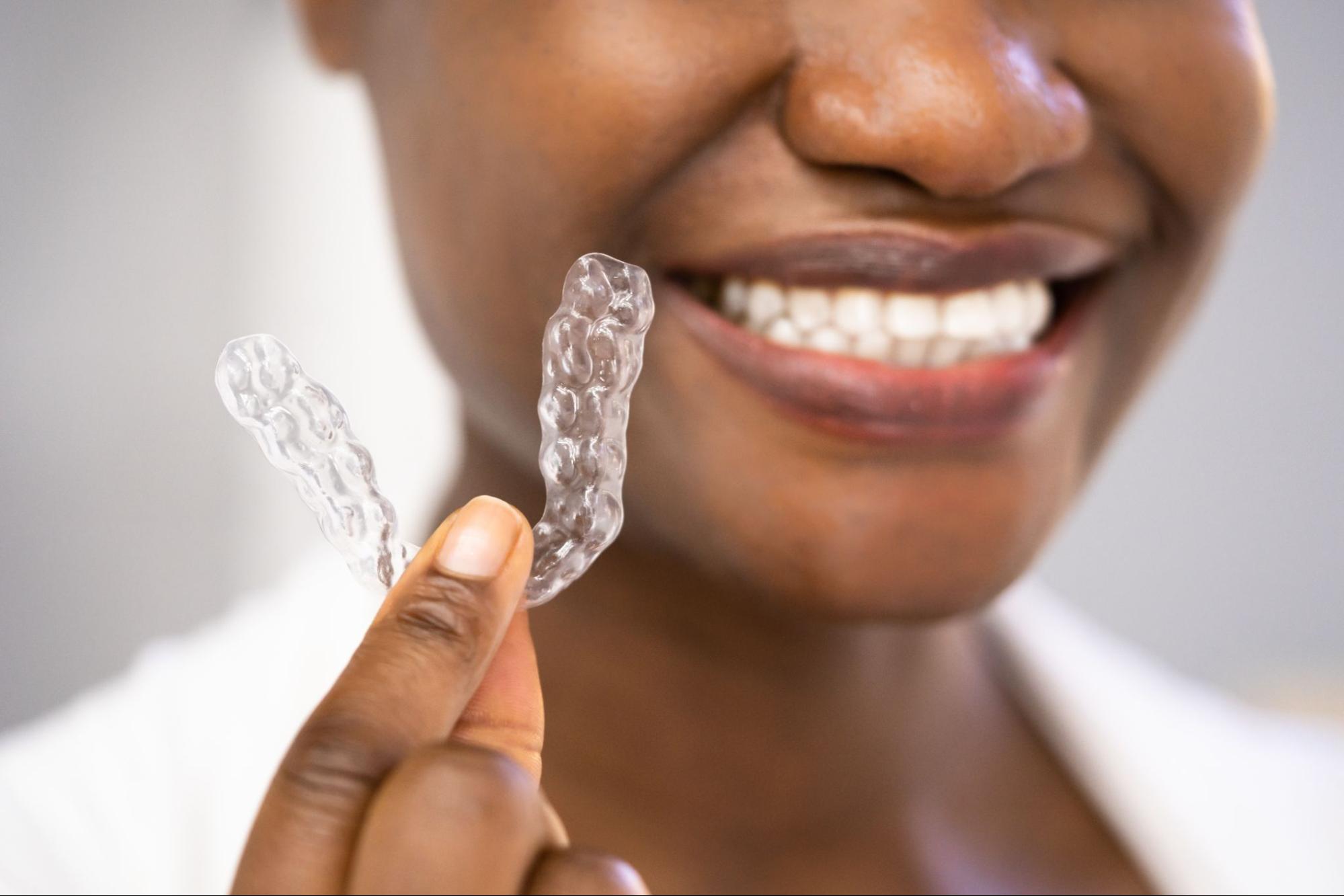
Clear aligners can correct many smiles, but not every case. Drs. Alba help your family understand which bite and spacing issues clear aligners can fix, and which ones may need Damon braces instead. Let’s break down exactly what clear aligners can and cannot correct so you know whether you’re a candidate for clear aligners.

What Are Clear Aligners?
Clear aligners are removable, transparent trays that gradually straighten teeth using gentle, staged pressure. Made from medical-grade thermoplastic, they’re worn 20 to 22 hours a day and swapped for a new set every one to two weeks. For many mild to moderate cases, clear aligners offer a discreet alternative to Damon braces.
Teens and adults who want a straighter smile without the look of brackets and wires often find clear aligners a great match. Because the trays are removable, you can eat, brush, and floss just like you always have. No food restrictions. No changes to your routine.
At Alba Orthodontics, we treat aligner cases using the Spark Clear Aligner System, which uses a stain-resistant material and a scalloped trim designed for comfort.
Still, clear aligners aren’t the right fit for every smile. Understanding which issues they can and cannot correct helps you make a confident choice about your care. Drs. Alba will walk you through the details during a consultation and let you know exactly what to expect.
How Do Clear Aligners Move Teeth?
Clear aligners move teeth by applying steady, targeted pressure to specific teeth in a planned sequence. Each tray shifts your teeth a small amount, and you switch to the next set roughly every one to two weeks. Over time, this gentle progression guides your smile into its final position.
Your customized treatment plan starts with digital scans of your teeth. No goopy impressions. 3D imaging software then maps every stage of tooth movement from start to finish, so you can actually see what your new smile will look like before you begin.
For trickier movements, Drs. Alba may add small tooth-colored attachments to certain teeth. These attachments give the aligners something to grip, which extends the corrections aligners can handle. Elastics can also be added to help correct bite issues.
Once you’re wearing your trays, Dental Monitoring lets us track your progress between visits. You simply scan your smile from home using a smartphone, and we review the images to make sure everything is moving as planned. Fewer visits. Same great results.
Smile Issues Clear Aligners CAN Correct
Clear aligners work well for many common smile concerns. During your visit, Drs. Alba will confirm whether your case falls within what aligners can handle.
Here are the smile issues clear aligners can typically correct:
- Mild to moderate crowding where teeth overlap or twist slightly
- Gaps and spacing between teeth, including small diastemas
- Minor to moderate overbite, where upper teeth cover too much of the lower teeth
- Mild underbite, where lower teeth sit slightly in front of upper teeth
- Simple crossbites involving only a few teeth
- Orthodontic relapse after previous braces or aligner treatment
- Mildly rotated or tipped teeth that need gentle repositioning
Beyond what they correct, clear aligners come with a few practical qualities worth knowing. They’re nearly invisible, so most people won’t notice you’re wearing them. Being removable makes eating and cleaning your teeth simple. And they tend to feel comfortable, with no brackets or wires rubbing against your cheeks during daily wear.
For image-conscious teens and busy adults, clear aligners can be a practical option. That said, more complex cases sometimes call for the precision of Damon braces. The good news? You’ve got options, and we’ll help you find the right fit for your teeth and your goals.
Cases Clear Aligners CANNOT Fully Correct
Some smiles need more than what aligners can deliver on their own. Severe crowding, large tooth rotations, and significant bite issues often respond better to Damon braces, which give Drs. Alba more precise control over tooth movement.
Here’s a quick side-by-side of when each option tends to work best:
Clear aligners depend entirely on you wearing them. If the trays sit in a case instead of on your teeth, results slow down or stall. For families who worry about consistency, especially with younger patients, Damon metal braces or Damon clear braces may be the smarter route.
Complex jaw growth issues sometimes require a combined approach, and in rare situations, oral surgery. Drs. Alba will look at your scans, review your bite, and recommend the treatment that gives you the best result in the shortest time.
What Affects Clear Aligner Treatment Length
How long you’ll be in clear aligners depends mostly on how complex your case is. A smile that needs minor spacing adjustments will take fewer trays and less time than one correcting a moderate bite issue. On average, treatment can range from a few months to about two years, with the total number of aligners tailored to your goals.
Several factors influence your timeline:
- Case complexity. The bigger the corrections, the more trays needed.
- Total treatment months. Longer plans typically involve more follow-up visits.
- Attachments or refinements. Added tools that fine-tune specific movements.
- Hybrid treatment. Some cases start with Damon braces and finish with aligners.
- Daily wear. Trays worn less than the recommended 20 to 22 hours a day stretch treatment out.
Your first visit at our Mechanicsburg, PA family practice includes a personalized timeline so you know exactly what to expect before you start.
Who Makes a Good Candidate?
Good candidates for clear aligners typically have mild to moderate alignment or spacing concerns and are ready to commit to wearing their trays consistently. If you can keep them in for 20 to 22 hours each day, you’re already halfway to a great result.
A few things to consider:
- Your teeth and gums should be healthy before starting any orthodontic treatment
- Consistency matters more than anything, aligners only work when worn
- Teens and adults are both great candidates, though treatment specifics may vary
- Complex cases may need Damon braces or a combined approach
Not sure if you qualify? That’s what your consultation is for. Drs. Alba will use digital scans and digital imaging to get a clear picture of your bite, then walk you through the options that make the most sense for your smile. Alba Orthodontics has been serving Mechanicsburg families for over 25 years, and Dr. Fred Alba and Dr. Jeff Alba have helped countless families find the right treatment fit. Their family practice brings a personal touch to every case they take on.
Frequently Asked Questions
Can clear aligners fix an overbite?
Yes, clear aligners can correct minor to moderate overbites in many cases. Attachments and elastics help guide the bite into a healthier position over time. For severe overbites tied to jaw growth, Damon braces or a combined treatment approach may be recommended.
How long does clear aligner treatment take?
Most clear aligner treatments take somewhere between six months and two years, depending on how much correction is needed. Simple spacing cases move faster, while moderate bite corrections take longer. Drs. Alba will give you a personalized timeline during your visit to our Mechanicsburg, PA family practice.
Are clear aligners as effective as braces?
For mild to moderate cases, clear aligners can be just as effective as Damon braces. For complex crowding, severe rotations, or big skeletal bite issues, Damon braces usually offer more predictable control. The American Association of Orthodontists recommends seeing a board-certified orthodontist to know which option fits your smile best.
What happens if my case is too complex for aligners?
If aligners aren’t the best fit, Drs. Alba may recommend Damon metal braces, Damon clear braces, or a hybrid plan that combines both. Every customized treatment plan is built around your goals, your comfort, and the fastest safe path to a beautiful smile.
Do clear aligners hurt?
Clear aligners are designed for comfort, though you may feel some pressure or tenderness for a few days when switching to a new tray. This is normal and shows the aligners are doing their job. Most patients find the sensation very manageable.
How do I know if I qualify?
The best way to know is to schedule a visit with Drs. Alba. Digital scans and imaging give them everything they need to confirm whether clear aligners will work for your smile.
Ready to see if clear aligners are right for you? Our family practice welcomes new smiles of every age, and we’d love to meet yours. Schedule a consultation with Dr. Fred Alba and Dr. Jeff Alba, and let’s find the treatment that fits your smile and your schedule. Generations of smiles, from our family to yours.